


Every SaaS company on earth got the same memo this year: be seen as AI native — or get left out of the super cycle.
Budgets are moving from SaaS software to AI software. The market prices AI companies and SaaS companies very differently. And so CEOs and boards are handing their CMOs a mandate that sounds simple and is anything but: reposition us as an AI company.
The problem is what happens next. Most companies sprint to the part that’s 100% within their control — the website, the press release, the sparkles-and-wands iconography — and stop there.
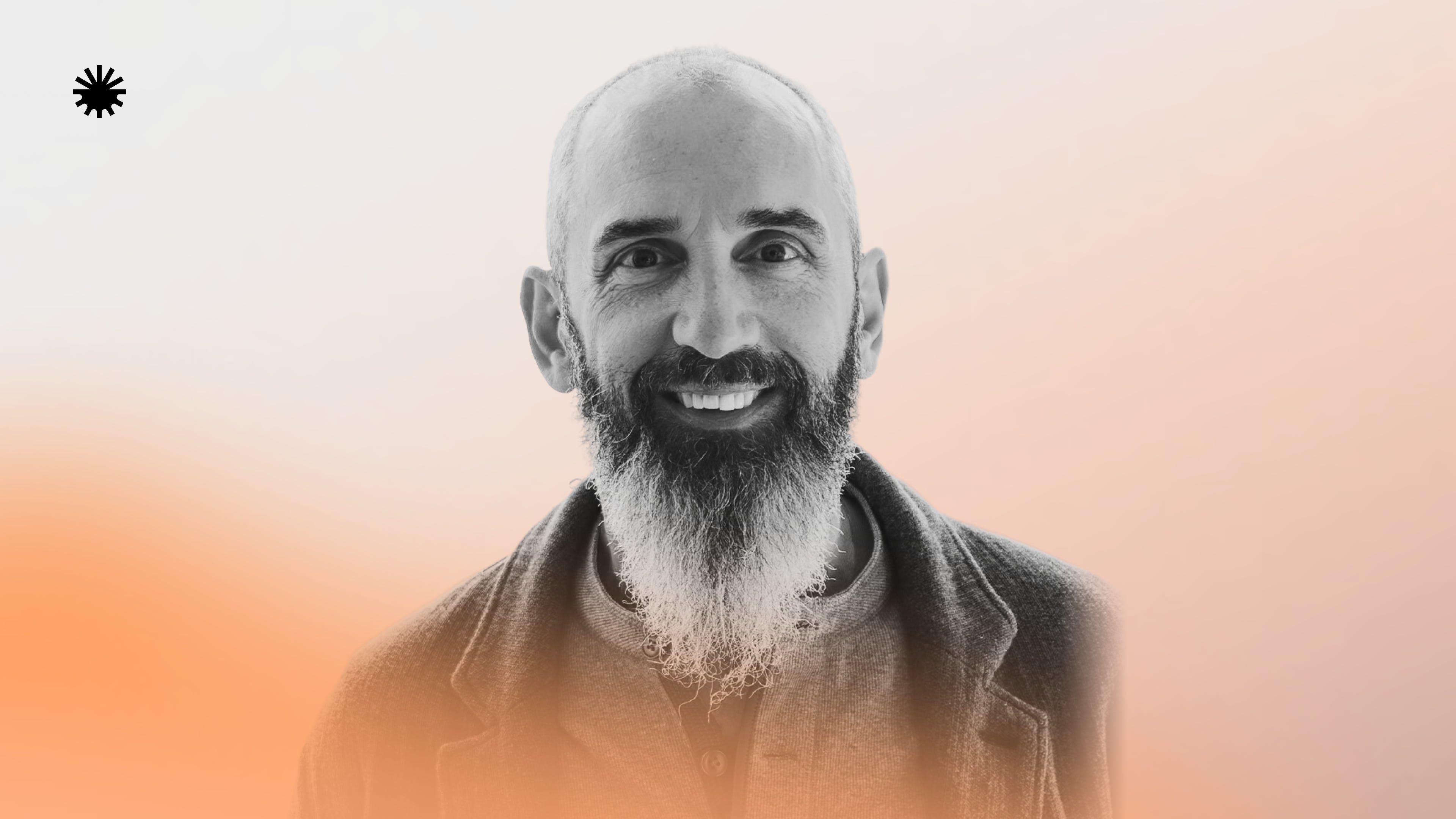
That was the tension at the center of my conversation this week with Joe Chernov. Joe is the operating partner at Battery Ventures, where he advises portfolio companies on marketing strategy and evaluates prospective investments. Before Battery, he was CMO at Pendo, Robin, and InsightSquared, and earlier in his career he ran content at HubSpot — where he helped build one of the most widely read blogs in tech and a content engine that generated the majority of the company’s marketing-sourced leads. He’s also, as I’ve said in print more than once, my favorite marketer.
Joe recently interviewed CMOs across and beyond the Battery portfolio about the SaaS-to-AI transition, and the resulting research is some of the sharpest thinking I’ve seen on what this repositioning actually requires.
Here were my five biggest takeaways.
1. AI Theater Is Laminate Flooring — and Everyone Can Tell
“From a distance, you might seem like an AI-native company. But it’s just laminate. Everybody walks on that floor and they know when it’s fake.”
Joe was careful not to pass judgment on CMOs doing a genuinely hard job — the instinct to add AI terminology everywhere is rational when your board is applying pressure and the website is the one thing you fully control. His point is that the mistake is stopping there. “AI native” gets treated like an OKR: mentioned on the website, check; mentioned in the press release, check; now back to the pipeline campaign.
But nobody buys at a distance anymore. Buyers interact with your company in LLMs, on LinkedIn, in your product, in your pricing — and laminate flooring only fools people until they walk on it. You can’t just say “we’re AI native, take my word for it.”
One of the sneakiest tells? Pricing. SaaS pricing was engineered to maximize the land, facilitate expansion, or make buying easier (Joe’s old joke: pick two). AI-native pricing is anchored on value derived — often labor replaced. If you’re claiming AI-native positioning on top of platform-plus-feature pricing, you’re inadvertently showing the market the floor is laminate. Experts can always spot a tourist.
Check out my full conversation with Joe on YouTube or wherever you get your podcasts.
2. Product Development Is No Longer the Constraint — Market Like It
“When product development cycles go to zero, you have permission to pre-announce your roadmap — and it becomes much more necessary, because your product advantages are more difficult to sustain.”
This was the realization Joe kept coming back to, the one that reframes everything else: for our entire careers, marketing operated on the assumption that product development was the bottleneck. That assumption is dissolving — and a marketing org that operates without it looks fundamentally different.
His example: for years, Marc Benioff was the only person in SaaS who could get away with pre-announcing products a year before they shipped. The rest of us didn’t have the courage, because dev cycles were long and unpredictable. Now two forces converge — it’s safer to pre-announce (because you can actually ship it) and more necessary (because point-in-time product advantages evaporate quickly). Buyers aren’t just buying your product anymore; they’re buying where you’re taking them.
3. Market the Outcome. Then Say “Oh, By the Way.”
“Marketers’ temptation is to lead with themselves. Tell the story of the outcome passionately — and then, oh by the way, how did we go about helping them? It happened to be our AI suite.”
If releases are shipping nonstop, customers cannot possibly keep up with your features and functions — which makes capability marketing a losing game. The temptation, especially under pressure to look AI native, is to lead with “our AI capabilities are X, Y, and Z.” But that’s marketing in service of getting your CEO off your back, not in service of the customer.
Joe’s framework is disarmingly simple: tell the story of the transformation first — the small team that outperformed larger competitors, the revenue that went from nascent to hockey stick — and let the AI be the casual footnote. He pointed to the ChatGPT ad where someone preparing for a date gets a lemon butter pasta recipe, and the spot ends on what it was really selling: a great night. B2B marketers measure outcomes in KPIs, but the challenge Joe left me with is worth sitting with — what’s the B2B equivalent of a really great night?
4. The Strongest AI Brands Are Leaning Into People
“In times of extreme change, we look to other humans to help us navigate.”
This one came with the most memorable story of the episode. Joe referenced the opening of 28 Days Later — an emptied-out London, and handwritten notes from loved ones pinned to bulletin boards. Danny Boyle was pressured to cut the scene, and refused, on the conviction that no matter how technological the world becomes, in a crisis people resort to the basics: other people.
That’s Joe’s read on why the strongest AI brands are humanizing so aggressively right now.
When a product demo promises to automate your entire go-to-market function, that can feel career-apocalyptic — and in that uncertainty, we turn to one another. You can see it tactically (product releases as videos of the actual team in a conference room, not changelog entries) and strategically: OpenAI, Anthropic, and Lovable — companies that could easily read as cold “Terminator brands” — are all investing in warm, nostalgic, deeply human storytelling in their brand campaigns. If the frontier labs believe humanity is the message, the rest of us should take note.
5. Stop Electrifying the Car One Wheel at a Time
“You can’t electrify a car one wheel at a time and call it an electric car.”
Here’s the CMO’s dilemma: you can’t take a quarter off pipeline to rebuild your stack from first principles, but you’re under constant pressure to modernize. (One prominent CMO told Joe their KPI is literally “how many AI tools am I testing right now.”) So teams bolt AI-native tools onto a SaaS-era stack — and end up with something kludgier and messier than before.
Joe sees three plausible future architectures: (1) a familiar-looking stack, but with battle-tested AI-native third-party tools at the core — potentially collapsing all the way into a single end-to-end GTM autopilot; (2) the Scott Brinker vision — homegrown, single-function apps and agents sitting on a foundational data layer and a contextual layer that makes that data usable, with packaged apps largely disappearing; or (3) engineering your own go-to-market infrastructure entirely, built by a new breed of technically capable marketers.
The encouraging part: there are humans in the marketing department in all three scenarios. What varies is the skill set. Which is why Joe’s challenge to be a builder again matters — he built a deal-evaluation app in Claude in roughly the time a blog post used to take him, having genuinely never written a line of code. The biggest constraint, he says, isn’t technical. It’s the unlearning.
Closing Thoughts
My biggest takeaway from this conversation with Joe is this:
Authenticity is now a competitive strategy. In a market where every company claims to be AI native, the winners won’t be the ones with the best sparkles — they’ll be the ones whose pricing, roadmap, storytelling, and stack all say the same thing the website does. Buyers walk on the floor. Make it real wood.
One more piece of news from the episode: Goldenhour and Battery Ventures are officially teaming up on the CMO Supper Club — a series and community for marketing leaders navigating exactly this transformation, strategically and personally. (Joe is lobbying for a ceremonial device box at the door. I’m getting one on order.)
And when I asked Joe how he stays grounded through all this change, his answer doubled as the best career advice in the episode: surround yourself with people who nudge you 10% past your comfort zone, let you catch up, and then challenge you to go 10% further. In a moment where the goalposts move every six months, your people are your moat.